奋斗
Chinese retirees are turning hard-won time into journeys once confined to maps and documentaries_我的网站

A | 一年一度的花魁赛马上就要来啦!今年的「仙兰缀玉」主题不仅有仙气拉满的限定外观,还新增了每日对决赛玩法。 Editor's Note:
With China's population of seniors over 60 surpassing 300 million, ensuring a happy and fulfilling life for all seniors has become a pressing issue for both families and the nation. How can the new generation of seniors in China break away from traditional norms and embrace a different lifestyle, supported by AI technology, multiculturalism and an elder-friendly society?
The series "Old Age, New Trends" explores emerging trends in the silver economy, creative social norms among senior citizens and innovative eldercare services. It examines the opportunities and challenges presented by an aging society, highlighting the diverse lifestyles of seniors and the booming eldercare industry in China. Beneath these new trends lies a reflection of Chinese modernization, which aims to provide more secure systems and dignified lives for its senior population.
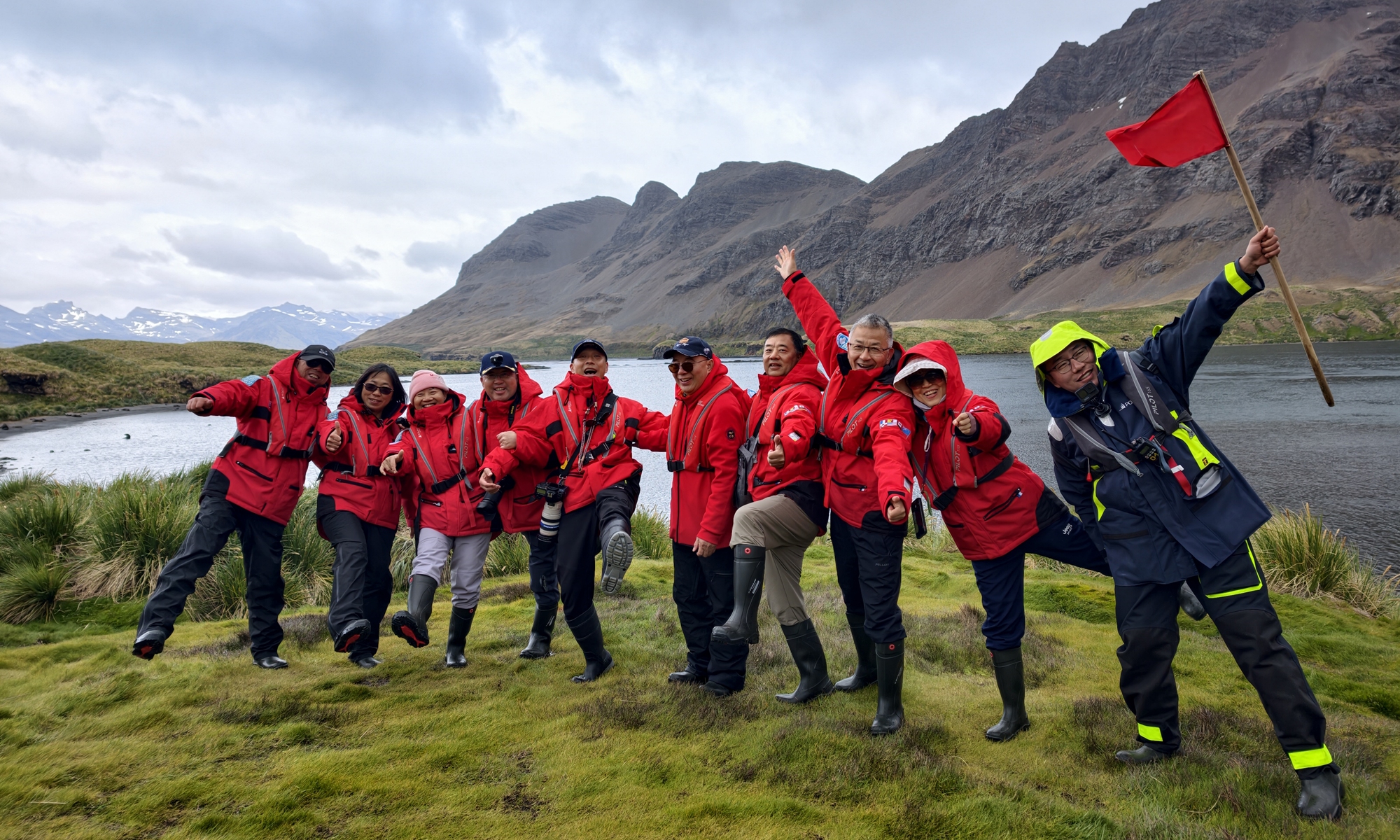
Chinese elderly tourists pose for a photo during a trip to Antarctica. Photo: Courtesy of Zhang XinyuanThe camera moves across ice and water of Greenland before settling on a group of travelers speaking Putonghua. Many are retired. They have come a long way from China to a place that, for much of their working lives, belonged more to maps and documentaries than to any realistic travel plan.
Polar journeys require money, good health and patience for long flights and itineraries that may change with the weather. Yet on ships bound for Antarctica, and tours reaching into the Arctic, retired teachers, doctors, researchers and business managers are becoming easier to find.
After decades scheduled around work and family, they now possess something that was once just as scarce as money: uninterrupted time.
By the end of 2025, China had 323.38 million people aged 60 or above, accounting for 23 percent of its population, according to the Xinhua News Agency. Their incomes, health and family circumstances vary enormously, and polar travelers remain a small, relatively affluent group. Still, their choices bring one change into sharp focus: For some among this new generation of retirees, growing older no longer means simply drawing the boundaries of life inward. It may also be a chance to return to journeys postponed for decades.
Behind every such journey lies a practical calculation: Is the body ready? Is the expense manageable? Can family responsibilities be set aside long enough? The answers are reshaping both travel products and ideas about life after work. At the farthest reaches of the map, some Chinese retirees are asking a new question: With their careers behind them and years still ahead, where do they want to go next?
No longer waitingIn early 2025, 63-year-old He Man stood on a snow-covered slope at Port Charcot in Antarctica and looked back toward the sea.
The Silver Endeavour, the ship that had brought her there, had shrunk to a white speck against the blue water. Penguins wandered nearby. "Standing there, I suddenly realized how small I was - and how small my problems were," she told the Global Times.
It was a journey He Man had postponed for most of her adult life. Before retiring, she was a deputy chief physician at the dental center of Shenzhen People's Hospital in Shenzhen, South China's Guangdong Province. During her 38-year medical career, most days she got up at 6 am, arrived at the hospital around 7 and began seeing patients at 8. On busy days, patients queued up outside her consulting room and she could barely stop for a drink of water.
During the last 20 years of her career, she had no more than 15 days of annual leave each year. Once time was set aside for caring for elderly relatives and looking after her child, what remained was enough only for short trips. She had visited several countries in Europe and North America, but Antarctica remained beyond reach.
"Antarctica had always been a dream, but I never really dared to imagine going," she said. The possibility became real only after friends from university made the journey in 2023 and 2024 and encouraged her to follow. By then, she had retired at 60. More important than anything else, she said, was that her time was finally her own.
In October 2024, she booked a place on an expedition ship carrying about 200 passengers. She went with her husband, a neighboring couple and another couple with whom they often traveled, forming a group of six.
The early-booking cruise fare exceeded 150,000 yuan ($22,250) per person. She and her husband later paid another 40,000 yuan each to upgrade their flights to business class.
"On a journey this long, at our age, we should treat ourselves well," she said. The flights between China and South America alone took more than 30 hours. The entire journey eventually lasted 41 days, combining an 11-day Antarctic cruise with visits to Argentina, Brazil, Peru and Chile. "Since we had flown so far, we wanted to see it all in one go."
The journey began with a lesson in polar uncertainty. To catch a period of calmer weather across the Drake Passage, the ship moved its scheduled departure from noon to 6 am.
The couple reached the port in Chile before dawn after barely sleeping, only to learn that replenishment and repairs had taken longer than expected. The weather window closed, and the captain diverted through the Beagle Channel while waiting two days for conditions to improve.
The retired doctor did not regard the delay as time lost. Marine biologists, ornithologists, geologists and polar historians delivered lectures on board throughout the day, while passengers watched the fjords outside. "There were many older people on the ship. We had time, and nobody was really in a hurry," she said.
When she finally stepped onto the Antarctic snow, she said she was so overwhelmed that she wanted to cry. The trip did not remove the pressures waiting for her at home, but it changed the scale on which she viewed them.
"When I feel stressed or upset now, I think of Antarctica," she said. "Life is only so long. Don't hold yourself too tightly. Let go when you should."
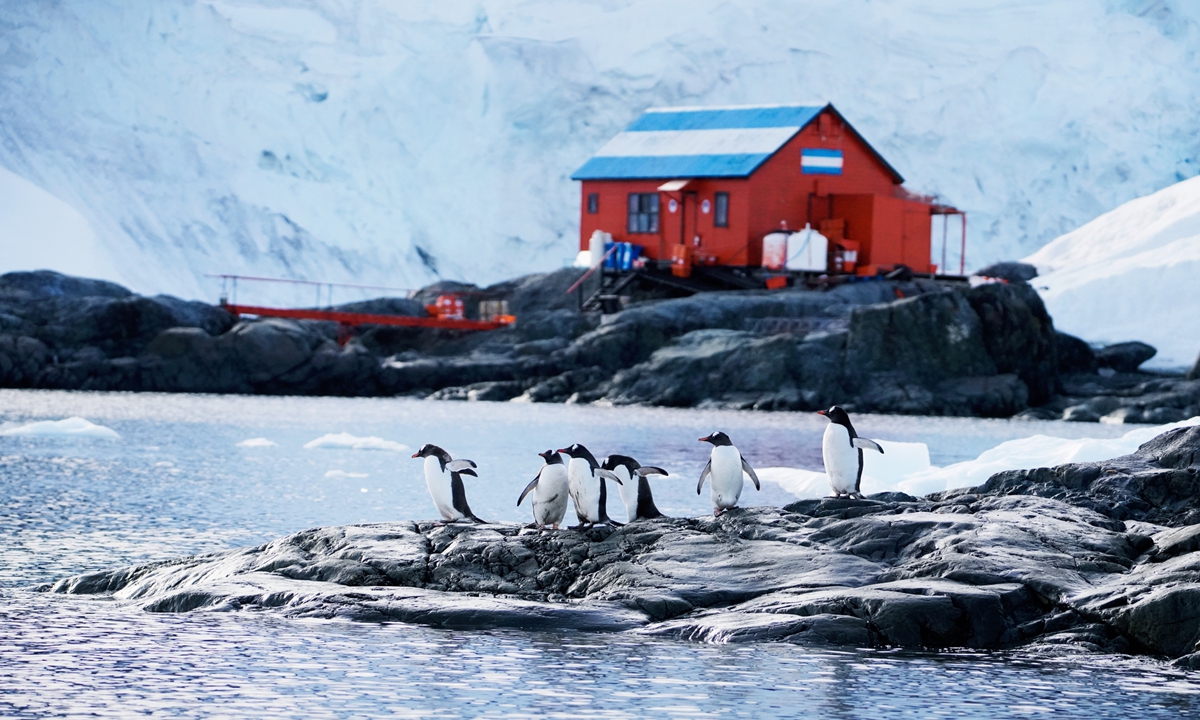
Scenery of Antarctica Photo: Courtesy of Zhang Xinyuan
Beyond one journeyAccording to He Man, people aged 60 or above accounted for more than half of the passengers on board, while Chinese travelers also made up more than half. After returning home, some of the travelers from Shenzhen created a WeChat group, while others had already begun discussing their next destination.
Travel agencies specializing in expedition cruises have noticed the same pattern. Zhang Xinyuan, founder and CEO of Newayer Cruises, told the Global Times that the company entered the Antarctic market in 2008 and sent its first group the following year. It has since served approximately 6,000 travelers on trips to the Arctic and Antarctica.
Among its customers, more than 65 percent are aged over 50, with those between 55 and 65 forming the largest group.
The makeup of that group has changed. Before 2020, Zhang said, most of the agency's polar customers were private business owners, senior executives and their family members. In recent years, the professional backgrounds of its customers have become more varied, with retired teachers, doctors, researchers and managers from public institutions increasingly represented. Retired women traveling alone have also become more visible.
Their journeys do not necessarily end after one polar voyage. Zhang once regarded Antarctica as a once-in-a-lifetime destination, but found that some customers continued on to the Arctic, the Galapagos Islands or wildlife reserves in Africa.
She cited a recently retired couple who booked trips to both Antarctica and the Arctic. While still aboard the Arctic cruise, they asked to reserve places on a southern Africa itinerary planned for the following year.
Industry data suggest that this is a growing, though still expensive, segment of the travel market. During the 2024-25 Antarctic season, Chinese nationals accounted for 10 percent of passengers traveling with operators belonging to the International Association of Antarctica Tour Operators, or IAATO, the second-largest share after the US.
In the 2025-26 season, IAATO operators recorded 85,195 visitors who landed in Antarctica and another 27,217 cruise-only passengers. The association said China had seen the greatest post-pandemic increase among the main sources of Antarctic travelers.
Data released by Tongcheng Travel offer a closer view of the high-end market. From January to September 2025, travelers aged between 50 and 70 accounted for more than 70 percent of users booking outbound luxury cruises on the platform. Among customers purchasing polar cruise products priced above 100,000 yuan, more than 90 percent were classified by the company as silver travelers.
As the customer base changes, the product is changing with it. Zhang said the longest flights, rather than the cruise itself, often present the greatest physical challenge. On board, travelers can decide whether to join shore landings, hikes or Zodiac cruises according to their physical fitness and health condition.
At Newayer Cruises, travelers aged between 75 and 80 are generally asked to provide medical documentation and travel with a family member. Its group products include emergency medical and evacuation insurance, while tour leaders accompany passengers from departure.
The agency has also added Chinese-language services and meals familiar to Chinese passengers, while leaving more space in itineraries rather than packing each day with activities. Flexibility is needed for reasons beyond the traveler's own health.
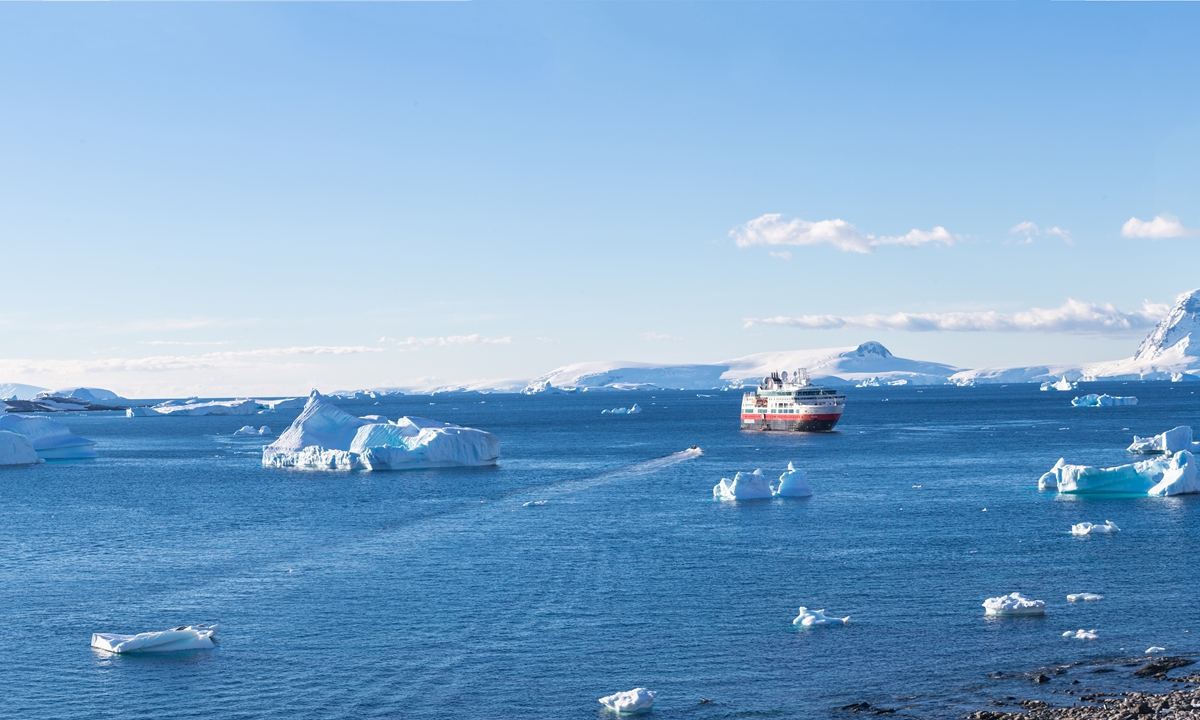
A ship sails among icebergs in Antarctica. Photo: VCG
The Arctic can waitPolar travel occupies the expensive outer edge of a much broader change in how older Chinese people spend their time. By the end of 2025, China had 323.38 million people aged 60 or above, accounting for 23 percent of the population. Those aged 65 or above numbered 223.65 million, or 15.9 percent.
The National Bureau of Statistics noted that people aged between 60 and 64 made up a relatively large part of the older population, and that many were still healthy and participated in social activities.
Travel is becoming one outlet for this age group. Data cited by the National Development and Reform Commission show that older travelers account for more than 20 percent of China's total tourist numbers.
Du Peng, dean of the School of Population and Health and director of the Institute of Gerontology at Renmin University of China, noted in a CCTV interview that more than 20 million people would enter old age each year over the following decade. Compared with earlier generations, he said, many would be better educated, assess their own health more positively and use the internet with greater ease.
Policy is beginning to respond to this more varied picture of old age. A State Council document on developing the silver economy calls for replacing rigid age restrictions on travel with assessments based more closely on health, while expanding travel insurance and strengthening consumer protection.
Still, the retirees boarding polar ships should not be treated as a portrait of all 323 million older Chinese people. They are a relatively small group able to meet three demanding conditions at once: sufficient savings, good health and control over their time.
Therefore, what these polar travelers demonstrate is not that every retirement should become an expensive adventure. Rather, they show that later life is becoming less uniform: rest and care remain essential, but for some people, retirement may also contain study, creative work, new friendships and journeys once postponed by jobs and family obligations.
Back in Shenzhen, He Man now divides her Xiaohongshu (RedNote) posts between dental-health advice and notes from her travels. Antarctica has been crossed off the list, but the list itself continues to grow.
She is considering a trip to see the animal migration in Africa and another to watch the aurora in Iceland. The Arctic is lower down on her list.
The Arctic can wait. This time, the delay is hers to decide.
。规则说多不多、说少不少,怕大家看长文头大,小口袋特意把核心内容都掰碎整理好了,看完直接上手不踩坑~

赛事基本信息本次活动时间为8月19日10:00至9月7日22:29,角色等级满70级即可参与,全区全服同步开放。

B | 入口位于卡诺萨城(290,449)找花魁形象大使,或者(290,441)的花皇宣传大使,点开就能进入活动界面。①晋级赛:先拿总决赛入场券(8.1910:00-8.2821:59)说白了就是海选阶段,按版本分赛道比拼,每个版本前100名能进总决赛,没晋级的兄弟也能接着冲单服排名。敲黑板重点:人气值跨赛程不清零!前期送的花、攒的人气,晋级后直接带进总决赛,一分投入都不浪费。②总决赛:角逐赛区至尊排面(8.28-9.721:59)晋级后按赛区重新分组,龙腾/虎啸/凤舞三大赛区各凭本事,最终决出赛区前10名拿顶级奖励。提醒大家记好加时规则:比赛最后5分钟如果榜首换人,就会触发加时赛,一直打到22:29:59才最终定榜。想冲第一的老铁,收尾阶段可得攥好道具蹲紧了,翻盘往往就在最后几分钟!另外榜单不会自动刷新,想查最新排名记得手动点「刷新」按钮哦。③每日对决赛:今年新玩法,跨服PK更刺激今年新增的每日玩法,同赛区跨服对战,既能叠总榜人气,还能拿额外奖励,性价比拉满。每天10:00-19:59报名,21:00准时结算。分初级/中级/高级三档房间,分别要101/501/1001朵仙兰玉蕊进场,每天只能选一个房间冲,丰俭由人。报名后只能在房间里送花,送花同样算你的壕气值;还能魔石拉票冲人气,没用完的魔石第二天1点自动退,放心冲!每个房间的第一名拿额外优胜奖,所有人拿到的花都会计入总榜人气,稳赚不亏。和总决赛一样,最后5分钟榜首易主也会触发加时赛,打到21:29:59结束。除了大赛程,每天还有日榜可以冲,每日23:59结算花魁/花皇/花壕三大榜单,前十就能领7天限时足迹,日常羊毛顺手薅~打榜核心道具与获取方式打榜核心道具就是「仙兰玉蕊」,1朵=1点人气值,想冲榜全靠它。获取主要两个路子:仙玉商城直接买,或者去玩「仙兰苑」「巧绽兰心」活动。获取凝玉兰蕾后在“琢玉阁”以魔石雕琢,便可化作数量不等的「仙兰玉蕊」。参与“琢玉阁”,通过里程碑可获得「仙翎跟宠自选箱」、「头像框·金枝碧叶」、「名片·仙兰缀玉」等稀有物品。

C |  今年的青金仙系外观,颜值真的能打本届赛事以清雅仙韵为核心,为全体神选者带来一系列限定定制外观:男女款时装「苍灵启昼·仙缘」与「苍灵织岚·仙缘」,鎏金配青纱,男款霸气女款仙气,穿出去回头率拉满!两款背饰「瑶华凌云」与「青木化羽」,繁花灵木化羽翼,细节质感拉满!专属足迹「碧落青萤」,步步生萤火,氛围感直接拉满!花魁与花皇双榜排名前列的玩家,将有机会赢取上述限定定制外观及丰厚排名奖励。领奖提醒总决赛结束前都能补人气冲奖励档位,没达到当前名次门槛也别怕,会自动往下匹配档位,尽量让大家都能拿到对应奖励。从2017到2026,花魁赛陪伴魔域人走过了整整十年。今年的「仙兰缀玉」,仙气与浪漫拉满,新的传奇等待书写。8月19日10:00,花魁赛正式开启——百花争艳,谁与争锋?这个七夕,我们魔域大陆见!(具体内容请以游戏正式上线版本为准)。
Current article:http://4tj8a5t.piepengxikuozhuangzebaohouye.sbs/list_akwhr/27o.html
Published on:19:35:11

 赛事基本信息本次活动时间为8月19日10:00至9月7日22:29,角色等级满70级即可参与,全区全服同步开放。
 今年的青金仙系外观,颜值真的能打本届赛事以清雅仙韵为核心,为全体神选者带来一系列限定定制外观:男女款时装「苍灵启昼·仙缘」与「苍灵织岚·仙缘」,鎏金配青纱,男款霸气女款仙气,穿出去回头率拉满!两款背饰「瑶华凌云」与「青木化羽」,繁花灵木化羽翼,细节质感拉满!专属足迹「碧落青萤」,步步生萤火,氛围感直接拉满!花魁与花皇双榜排名前列的玩家,将有机会赢取上述限定定制外观及丰厚排名奖励。领奖提醒总决赛结束前都能补人气冲奖励档位,没达到当前名次门槛也别怕,会自动往下匹配档位,尽量让大家都能拿到对应奖励。从2017到2026,花魁赛陪伴魔域人走过了整整十年。今年的「仙兰缀玉」,仙气与浪漫拉满,新的传奇等待书写。8月19日10:00,花魁赛正式开启——百花争艳,谁与争锋?这个七夕,我们魔域大陆见!(具体内容请以游戏正式上线版本为准)。